

Separating laminated glass. Cleanly and economically.
The Recyglass® system separates automotive glass as well as laminated and safety glass panes into glass, PVB film and residues – dry, with little wear and fully automatically in a closed loop.
Glass is 100 % recyclable. Laminated glass still ends up on the heap.
In some applications, up to 90 % recycled glass goes into new products today. With PVB laminated glass the picture was long a different one: liquids, high speeds and cutting comminution drove up wear costs and change intervals – the process was often considered uneconomical.
That is why many laminated glass panes worldwide are still landfilled instead of returning the raw materials they contain to the economic cycle at a profit.
-
Today: landfill or heap -
With Recyglass®: raw material
No laboratory solution. Prall-Tec.
We have steadily refined the geometry of our shredder shafts over many years. Every machine is planned, designed and built in our own works in Lengerich – the result is a plant tailored to your material and your site.
-
Made in Germany
Developed and manufactured at Prall-Tec in Lengerich.
-
100 % recycling
Glass, PVB film and residues are separated – film that is not clean enough runs through the process again.
-
Individual concept
Tailored to every customer – with various expansion stages and machine components.
-
PVB as a valuable material
The PVB film stays largely intact during separation – the basis for high-quality PVB recycling.
From a pile of panes to a clean fraction.
The feed hopper and pre-shredder make for simple product feeding and a continuous supply. The PTRG then separates glass and PVB film without comminuting the film any further.
-
01 Feed
Wheel loader or sorting grab
The plant is simply fed by wheel loader or with a sorting grab on an excavator – one operator is enough.
-
02 Pre-shredding
PTG 4 shredder
High throughput and consistent quality – virtually cost-free and low-maintenance thanks to optimised shaft geometry.
-
03 Metal separation
Metal and optional non-ferrous metal
Metallic components are discharged, and non-ferrous metals in addition on request.
-
04 Delamination
PTRG separates glass from film
The glass is released from the PVB film without comminuting the film any further.
-
05 Screening & classifying
Clean separation, recirculation
Screening and classifying separate pieces of film from glass cullet. Film that is not clean enough goes back into the process.
What comes out of the pane.
The degree of cleaning of glass and PVB film is adjustable. Around 90 % of the film leaves the process clean; the remaining 10 % with adhering glass runs through the PTRG again via the recirculation loop.
-
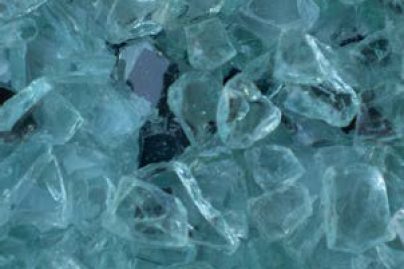 Glass 99.7 % clean Main stream, 0–30 mm after the PTRG
-
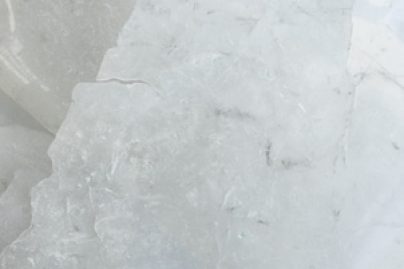 PVB film clean · approx. 90 % For new applications made from recycled PVB
-
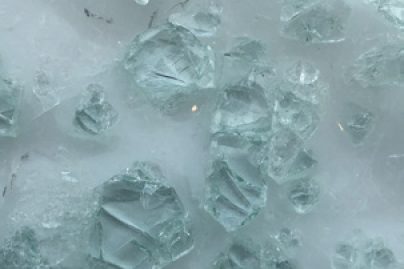 PVB with adhering glass approx. 10 % · recirculation Runs through the Recyglass® process again
-
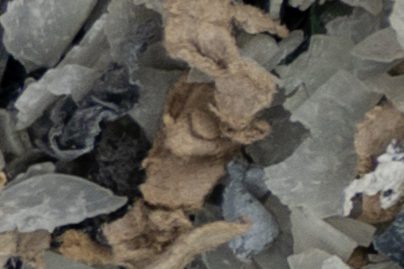 Residues and waste Discharged separately


-
Glass fraction in storage -
PVB film after separation
The machines of the Recyglass® line
Pre-shredder and delamination form the heart of the plant. We determine together which expansion stage suits your material flow.
-
PTG 4 -
PTRG
| Machine | Throughput | Weight | Inlet size | Feed size | Power | Final material |
|---|---|---|---|---|---|---|
| PTG 4 | 40 t/h | 9,000 kg | 2,000 × 3,000 mm | 3,000 mm | 4 × 18.5 kW | 0–250 / 0–200 mm, depending on shafts |
| PTRG 100-67 | 25 t/h | 7,000 kg | 280 × 670 mm | 300 mm | 90 kW | 0–30 mm glass |
| PTRG 100-100 | 35 t/h | 9,500 kg | 280 × 1,000 mm | 300 mm | 132 kW | 0–30 mm glass |
Table scrolls sideways
Nine reasons for Recyglass® in laminated glass recycling
From the delivered pile of panes to clean glass and PVB film: Recyglass® is designed for separating laminated and safety glass.
- Feeding and pre-shredding of laminated glass panes in one machine
- Simple, fast feeding of automotive and laminated glass into the hopper
- One-person operation from a wheel loader or excavator
- Fully automatic control in a closed loop – PVB with adhering glass returns to the process
- Adjustable degree of cleaning for glass and PVB film
- Easy, fast access to all machines
- Cost-efficient and low-maintenance
- Fully electric plant below 250 kW
- Usable anywhere, without special foundations
Glass recycling is growing.
Bottles and flat glass have been recycled economically almost everywhere for decades. Laminated glass processing is catching up, because demand for glass and PVB is rising – and more and more companies are developing new applications for recycled PVB, which today comes largely from laminated glass panes.
The scale of the potential is already clear from the global vehicle fleet – and every windscreen is laminated glass. By 2050, around 2.9 billion vehicles are expected, roughly 1.2 billion more than in 2023.
Request a project meetingSources: 1960–2010 Prall-Tec; 2023 and forecast 2050: OPEC World Oil Outlook.
Frequently asked questions
Something missing? Tell us your material and your site – we answer specifically rather than in general terms.
-
Which types of glass can Recyglass® process?
Automotive glass such as windscreens as well as various other laminated and safety glass panes with a PVB interlayer.
-
How is the plant fed?
By wheel loader or with a sorting grab on an excavator, straight into the feed hopper. The plant can be operated by one person.
-
How clean are the glass and the film?
The glass fraction reaches 99.7 % purity. The degree of cleaning of glass and PVB film is adjustable; film with adhering glass is automatically returned to the process.
-
Does the plant need water or a special foundation?
No. Recyglass® works without special foundations and is fully electric with a connected load below 250 kW – which means the plant can be used almost anywhere.
-
How is the plant dimensioned?
Every plant is created as an individual concept – matched to your material, the desired capacity and your site.
Request a project meeting
Tell us your material, the estimated annual volume and your site. We will get back to you with the next steps towards your plant concept.